Bon Voyage Travel & Tours - 0800 316 3012

Tailor-made travel USA & Canada

The West

Sample itineraries

America's Four Corners

From £1495

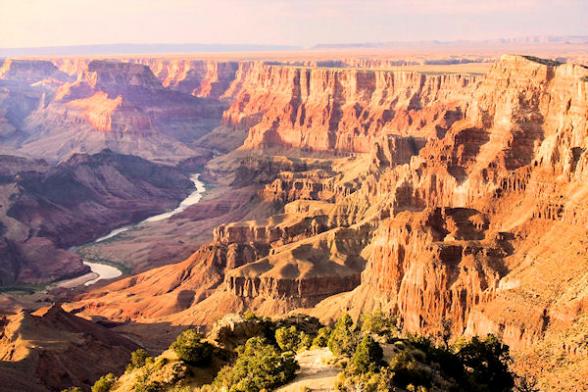
Imagine yourself listening to the silence, standing on a 40 million year old geological formation, surrounded on all sides by dwelling places of the “sacred ones” in an enchanting landscape filled with mesas, buttes, and flying pinnacles. Crouching down to crawl through a small opening, the world suddenly expands into hundreds of pockets where thousands of ancients built their homes in the side of a cliff more than 500 years before Columbus set foot in the new world.

This is the place where four US States - Arizona, Colorado, New Mexico, and Utah - intersect at the point they call Four Corners and is the only place in the entire U.S.A where four states touch.

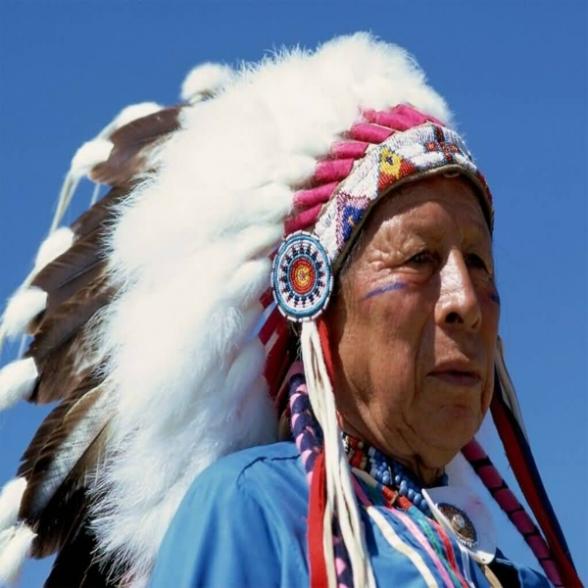
Indian chief

Highlights:

  • Indian Pueblo Cultural Centre
  • Rio Grande Nature Centre
  • Lode Star Astronomy Centre
  • Sandia Peak Aerial Tram
  • Trail National Scenic Byway
  • Santa Fe & Taos
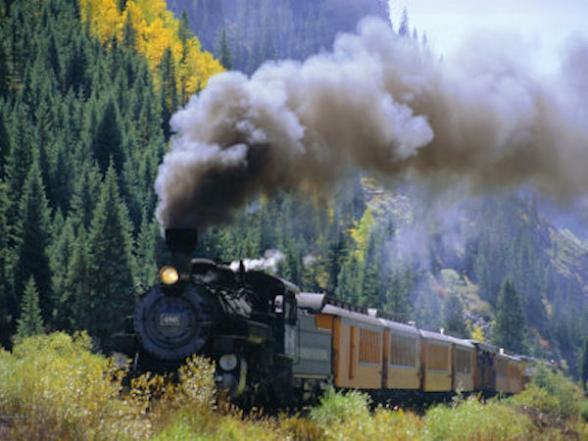
  • Durango and the scenic Silverton Railroad
  • Mesa Verde National Park
  • Monument Valley
  • Garden of the Gods
  • Canyon de Chelly

Price per person includes:

  • Return flights to Albuquerque, New Mexico
  • All taxes
  • 7 nights accommodationin sought after locations
  • 8 days mid-size car hire
  • A personalised road book which is a complete guide to travelling within North America and provides bespoke driving instructions for your holiday.

Ideal time to visit: Year Round

Prices are based on off-season travel. Please call or email for costs for your preferred date of travel.

Day 1 Albuquerque

Indian chief

Albuquerque is filled with worthy things to do, whether your primary interest is Native American culture, Southwestern culture or nature. The top attractions include the Albuquerque Biological Park, which is home to the Albuquerque Aquarium, Rio Grande Botanical Gardens, Rio Grande Zoo and Tingley Beach, the New Mexico Museum of Natural History and Science; the National Atomic Museum, the Indian Pueblo Cultural Centre and the Rio Grande Nature Centre.

The lush Botanic Garden, which encompasses 36 acres, and a 10,000 square foot glass conservatory is an oasis in the New Mexico desert. The Aquarium takes visitors on a journey down the Rio Grande from Albuquerque to its mouth at the Gulf of Mexico. The New Mexico Museum of Natural History and Science is also home to the Lode Star Astronomy Centre.

The views are spectacular from the Sandia Peak Aerial Tram and the Plaza to Plaza Walking Tour that takes you from Albuquerque’s original Plaza in Old Town to the new Plaza in the contemporary section of downtown. You also have the option to take a drive on the Turquoise Trail National Scenic Byway which takes you out into the byways and backroads around Albuquerque.

Accommodation: Hotel Albuquerque at Old Town or similar

Day 2 Santa Fe

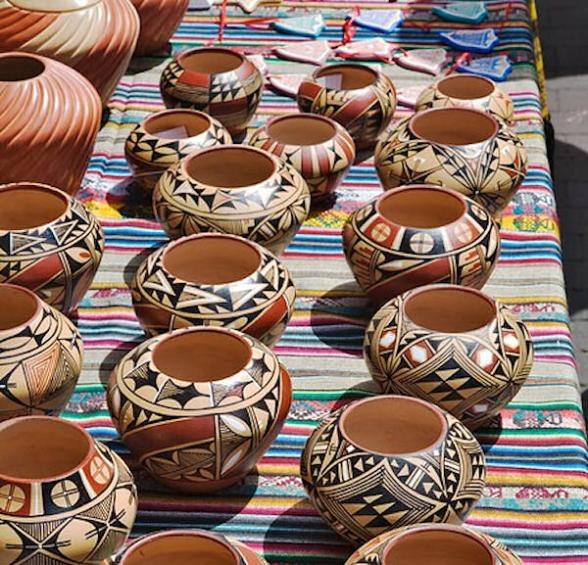
Santa Fe Market

Distance: 63 miles

Founded in 1610 by Spanish explorers, Santa Fe is the most European of American cities. Inhabited by Pueblo Indians for centuries before the Spanish arrived, its architecture is adobe, its pace slow and civilized, and its air crisp, clean and dry. Long before the English landed on Plymouth Rock, the city, located at the other end of Camino Real, the Royal Road, from Mexico City was a centre of commerce, trade and culture. Later, thousands of European settlers travelling across America on the Santa Fe Trail poured in from the Midwest, seeking a better life in the gold rush era of the desert southwest.

Thriving under the Spanish, Native American, Mexican, Territorial government, American Confederates (one wonders how the struggle for independence by the South got so farafield) and ultimately Union rule, it took over three hundred years for the city to emerge as the oldest state capital in the United States.

The Plaza, in the centre of town, once filled with traders and wagon trains, is now home to art galleries, sophisticated restaurants and unique shops. Original Spanish architecture from the 1600,s surrounds the central square, including the oldest continuously occupied public building in the nation.

Accommodation: Inn of the Governors or similar

Day 3 Durango

Colorado Cowboys

Distance: 214 miles

When you reach Durango, if you think you’ve seen it before, it’s the picture perfect Old West town that has starred as the background for Butch Cassidy and the Sundance Kid, City Slickers, Cliffhangers and many other movies. So authentic that you might expect a gunslinger to step right into the street any minute. The nightly show at the Strater Hotel is right out of the old West.

Founded by the Denver and Rio Grande Railroad in 1880, Durango was once a young city surrounded by silver mining towns and the wild, wild west. Today the railroad still passes through, even though the mining towns have turned to ghost towns. Durango has settled in as a carefully preserved National Historic Landmark, like no other in America.

Accommodation: General Palmer Hotel or similar

Day 4 Durango

Mese Verde

Very near Durango, Mesa Verde National Park holds over 4,000 known archaeological sites. Six hundred of these are cliff dwellings, built by the fourth era of Ancestral Puebloans to occupy the region. The first group were Basketmakers who lived in the region between the start of the Christian era to about 400 AD. Around 400 AD, the residents started building roofed dwellings and making pottery. Archaeologists termed these people the Modified Basket-makers. Near 750 AD, they began to use bows and arrows and group their houses to form compact villages. Pueblo is a Spanish term meaning village. The Cliff Dwellings you will visit at Mesa Verde date from between 1100-1300 AD when homes were built into alcoves in the canyon walls.

Accommodation: General Palmer Hotel or similar

Day 5 Monument Valley

Distance: 202 miles

Monument Valley has a series of spectacular landscapes, yet each is completely different from the other geological formations in the area. In 1883, prospector Cass Hite wandered up White Canyon from his base camp along the Colorado River in search of gold. Instead he found three magnificent bridges sculpted from sandstone that were publicized by National Geographic Magazine in 1904. In

1908, President Theodore Roosevelt established Natural Bridges National Monument, creating Utah’s first National Park Service affiliate. When the park was expanded to protect nearby Puebloan structures, the General Land Office assigned the Hopi names of “Sipapu,” (place of emergence), “Kachina” (reflecting the rock art on the bridge) and “Owachomo” (rock mound). A nine-mile scenic loop starting and ending near the Natural Bridges Visitor Centre overlooks each of the bridges. A trailhead for each bridge is also located along the drive.

Valley of the Gods is a red dust landscape punctuated with silver-green brush. The valley, lying at the base of a 1,200 foot bluff is called Cedar Mesa. The area’s jagged towers, gravely washes and tortured sandstone formations line the Valley of the Gods Road, a 17-mile dirt route that forms a scenic loop. Each bend in the road reveals a surprise, a slightly different shade of red or a new rock contortion, many of which are described in Navajo legend as ancient warriors frozen in time.

The Hovenweep National Monument protects six Puebloan-era villages spread out over a 20-mile expanse of mesas and canyons on the Utah-Colorado border. The Square Tower Group, with multistoried towers perched on canyon rims and balanced on boulders, serves as the primary contact facility with a Visitor Centre and Interpretive Trail. Take time to explore and marvel at the skill of these ancient builders.

Accommodation: The View Hotel or similar

Day 6 Chinle

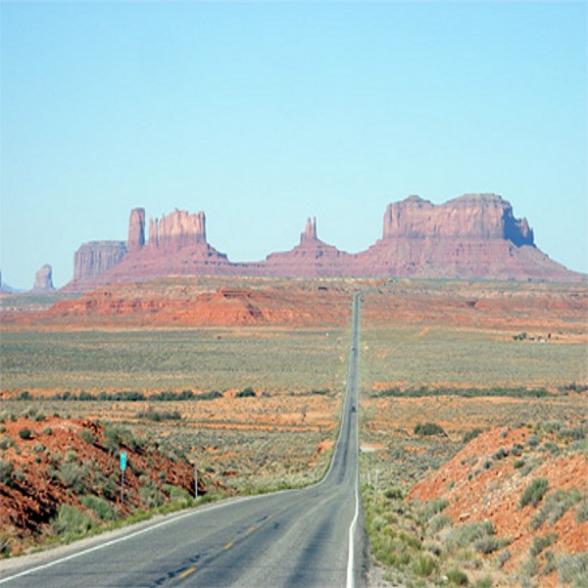
Road view, Monument Pass

Distance: 144 miles

Chinle is located very near Monument Valley which is not a valley at all, but a wide flat, sometimes desolate landscape with red mesas and buttes jutting hundreds of feet in the air. These are the surviving remnants of sandstone layers that once covered the region. Some rise as high as 1,000 feet. Canyon de Chelley covers 130 square miles surrounding three major canyons. Many well reserved Anasazi ruins reveal the culture of the ancient peoples who lived in the area, ancestors of he present day Navajo who still farm the valley floor.

Accommodation: Thunderbird Lodge or similar

Day 7 Albuquerque

Pow Wow festival ABQ

Distance: 229 miles

Today as you head back to Albuquerque, we suggest a side trip from Canyon de Chelley to Shiprock and Farmington. As you pass through Shiprock, it will be very apparent why this town received its name. Between Farmington and Aztec, we suggest a side trip to Aztec to the Aztec Ruins National Monument, once home to ancestral Pueblo people. From there, it’s a scenic drive back to Albuquerque to be well positioned for your flight tomorrow.

Accommodation: Hotel Albuquerque at Old Town or similar

Day 8 Albuquerque

As you lift off for home today, rest assured that you have explored some of America’s most unusual landscape treasures.

Want to extend this tour? Call Bon Voyage to discuss the options available to you.

Back to index