Deep South Holidays
Sample itineraries
Best of the Old South and New South
From £1995
The South is a region of incredible contrasts. Large, sophisticated, contemporary cities coexist peacefully with small authentic historic towns. Civil Rights and the Civil War are intertwined historically, never to be separated. Music is integral to Southern culture and in fact, all today’s popular styles were invented here, but that music comes in many different distinct forms, rock, country, gospel, zyedco, blues, jazz and more and within those styles varies from state to state.
The bayous of Louisiana are very different from upcountry Alabama,
which is the southern end of the Appalachian Mountains. In between,
there is an immense variety of cities and communities, each with its
own unique identify. Many cities of the Old South have transformed into
bustling centers of commerce and the arts. Other towns have engaged in
dramatic historic preservation projects to display their historic
attributes to visitors in a grand manner. Throughout, there is a great
cultural texture that pervades life on every front.
We have arranged this tour so that you can enjoy the best of the old and the best of the new in every location you visit. Contrast the US Space Center in Huntsville with Burritt on the Mountain where the oldest structure dates from 1810. Contrast the First White House of the Confederacy in Montgomery with Martin Luther’s speech on the Alabama Capital Steps. Contrast Elvis in Shreveport with the music in New Orleans and Lafayette. Contrast the country music scene in Nashville with the most opulent mansion room constructed in the antebellum South. The list goes on...
Tour Highlights include:
- Great Smoky Mountains National Park
- US Space & Rocket Centre
- Country Music Hall of Fame
- Grand Ole Opry
- Belle Meade PlantationHome
- Tennessee Antebellum Trail
- Beale Street, Memphis
-
Graceland
- BB Kings Blues Club
- Sun Studio
- Stax Museum of American Soul Music
- Mississippi Blues Trail
- Tupelo - birthplace of Elvis Presley
- Natchez - the oldest town in Mississippi
- Natchez National Historical Park
- Monmouth PlantationHome
- New Orleans and The historic French Quarter
- New Orleans Jazz Historic Park
- Laura Plantation
- Steamboat Natchez Cruise
- Gulf Islands National Seashore
- Hank Williams Museum
- Birmingham - Alabama's largest city
- Biirmingham Civil Rights Institute
Price per person includes:
-
Return flights from the UK to Atlanta, Georgia including airport taxes
-
15 days mid-size car hire
- 14 nights in superior hotels and inns in sought after locations
- A personalised road book which is a complete guide to travelling within North America and provides bespoke driving instructions for your holiday.
Ideal time to visit: April to November
Prices are based on off-season travel. Please call or email for costs for your preferred date of travel.
(SM)
Day 1 Arrive Atlanta
Atlanta represents the best of the “New South”. You won’t find much of Scarlett O’Hara lingering here any longer. She’s safely tucked away in the mansions and museums preserved for all time, as the rest of the city has moved on.
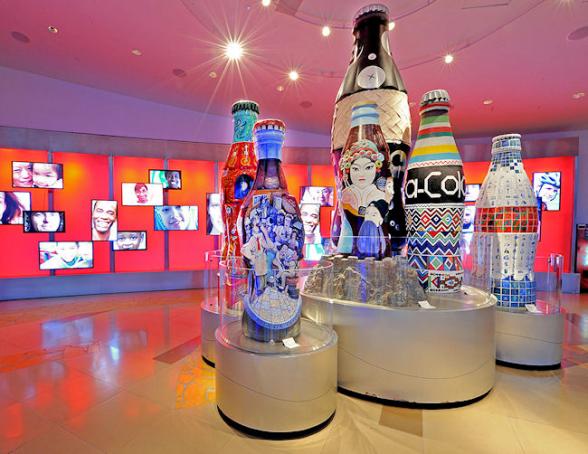
A good introduction to the city and “The South” in general is the Atlanta History Center. You will find it in Atlanta’s main museum district, six miles north of downtown and in the upscale Buckhead neighbourhood. An unusual place to visit is Underground Atlanta, literally under the centre of the city. It was restored in the 1980s and is a great spot for shopping and entertainment. Since the 1996 Summer Olympics, Centennial Park has been the center of Atlanta. Here you will find the world’s largest aquarium, the $200 million Georgia Aquarium and the World of Coca Cola where you can view the complete story of the world’s most recognisable and most successful brand. Close by, you can take a Behind the Scenes Tour of the CNN Studios which provides a fascinating look at the organisation that changed the way the world views news.
Accommodation: Hilton Atlanta Downtown or similar
Day 2 Great Smoky Mountains National Park
Distance: 203 miles
Plan to spend the whole day exploring Great Smoky Mountains National Park. It’s well worth the time. As the Blue Ridge Parkway meanders south, the blue haze which gives the Parkway its name gradually turns to a misty gray, the namesake of the Great Smoky Mountains.
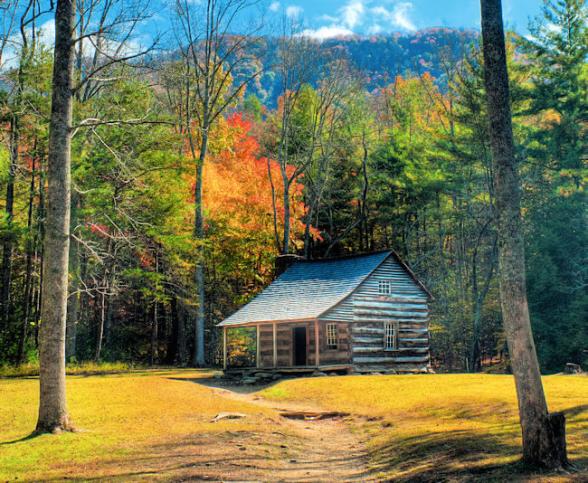
Great Smoky Mountains National Park encompasses over 800 square miles and remains one of the most pristine natural areas in the East. There are 384 miles of roads to choose from and the speed averages 30 miles an hour. The most visited location in the Park is Cades Cove, a broad valley surrounded by mountains. An 11 mile one way loop road circles the cove. Some of the best opportunities for wildlife viewing can be found here, White-tailed deer are frequent as well as bears, coyotes, and wild turkeys.
At some point you’ll want to travel on the Cherohala Skyway National Scenic Byway which winds 51 miles across the mountaintops at 5,000 feet. The Charles Hall Museum and Skyway Visitor Center are located at the western gateway to the Skyway. To see autumn’s colours at their peak, plan your trip around the end of October or early November. You’ll be astounded by fiery oranges, deep reds, and glowing yellows of more than 120 species of trees native to the area.
Accommodation: Inn at Christmas Place, Pigeon Forge or The Resort at Governor's Crossing
Day 3 A visit to the US Space & Rocket Center
Distance: 245 miles
You can enjoy the scenic beauty of Alabama while driving the Lookout Mountain Parkway south from Chattanooga. The main attractions are waterfalls, canyons, scenic brow vistas, unique towns and villages, state and national parks, nature preserves and other natural wonders. On most of the drive you’ll be looking up at places like De Soto Falls, which drops 104 feet. Looking down, you can marvel at the 17 mile gash in Lookout Mountain that forms the deepest gorge east of the Mississippi.
Turing east off the scenic drive, you’ll be headed for Huntsville. The highlight of your visit today is the US Space and Rocket Center where you can become an astronaut for a day. You can launch yourself into space, feel the G forces of acceleration, and experience weightlessness.
Contrast the US Space and Rocket Center with Burritt on the Mountain, where the oldest buildings dates back to 1810. Historical interpreters demonstrate activities typical of a 19th century farm, with real animals, real crops and authentic environments.
Accommodation: Westin Huntsville
Day 4 The Capital of Country Music
Distance: 113 miles
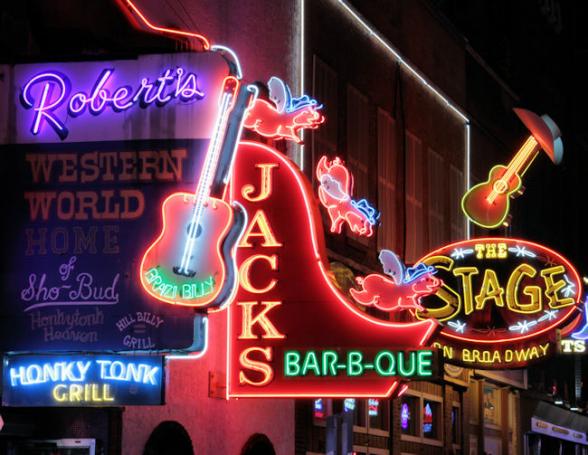
Contemporary Nashville is about music. This city has been the Capital of Country Music since the Grand Ole Opry began broadcasting from here in 1925. This is the show that made country music famous. From humble beginnings as a barn dance in an insurance company building, today the Grand Ole Opry House is a place where you can see superstars, legends and up-and-coming artists perform.
Your first stop has to be the Country Music Hall of Fame. Here you can see an homage to countrymusic's finest including Hank Williams, Loretta Lynn, Patsy Cline and Johnny Cash. Tours of Historic RCA Studio B leave several times a day from the Country Music Hall of Fame.
A visit to Nashville would not be complete without a stop at the country-music shrine, the Ryman Auditorium and Museum, home to the Grand Ole Opry from 1943 to 1974. You can go to the Ryman for live music performances, or to take a tour. Tours include photo opportunities on the legendary stage and seeing backstage dressing room areas.
Accommodation: Sheraton Nashville for 2 nights
Day 5 Tennessee Antebellum Trail
The historic side of Nashville features some of the best antebellum structures in the South. Belmont Mansion, completed in 1853 by Adelicia Acklen, is one of the most elaborate and unusual homes in the South.
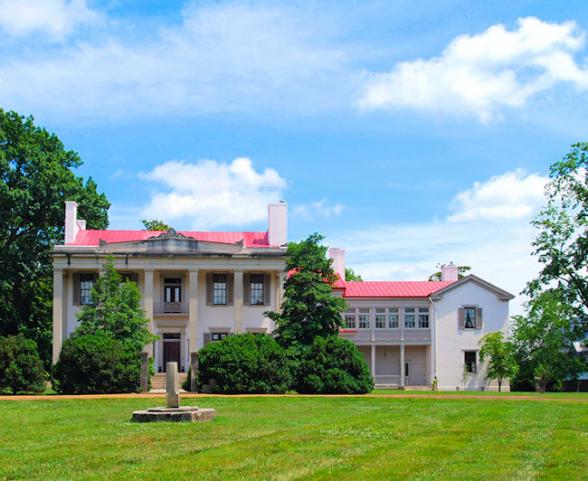
Belle Meade Plantation is considered the “Queen of Tennessee Plantations.” In 1986, a descendant of one of the original families undertook a restoration project to its late 19th century appearance. A series of photographs which documented the house from the era, added to the authenticity of the restorations. Belle Mead’s story, like so many other magnificent southern properties, is one of boom and bust, with the whole having once been sold at auction in 1906.
Descendents of the Cheek family transformed the Cheek mansion into a Museum of Art, surrounded by 55 acres of lush gardens, to make it one of the recognised centres of contemporary art in the Southeast.
South of Nashville, you can tour the Tennessee Antebellum Trail, which includes the home of President James K. Polk and other homes with very interesting stories.
Day 6 Music Central!
Distance: 209 miles
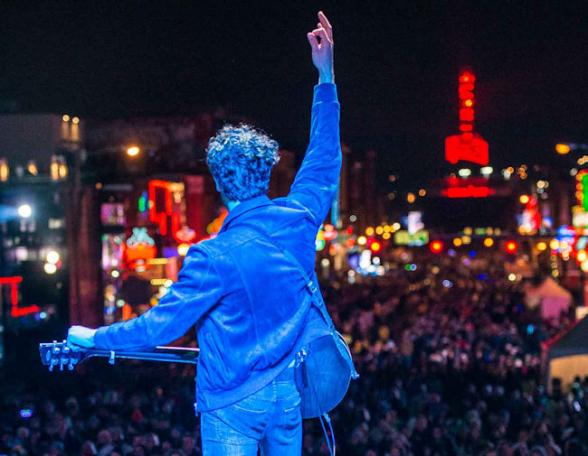
The centre of Memphis attractions is on Beale Street, downtown between 2nd and 4th Streets. The historic district has recently reemerged as a new and improved bustling entertainment centre.
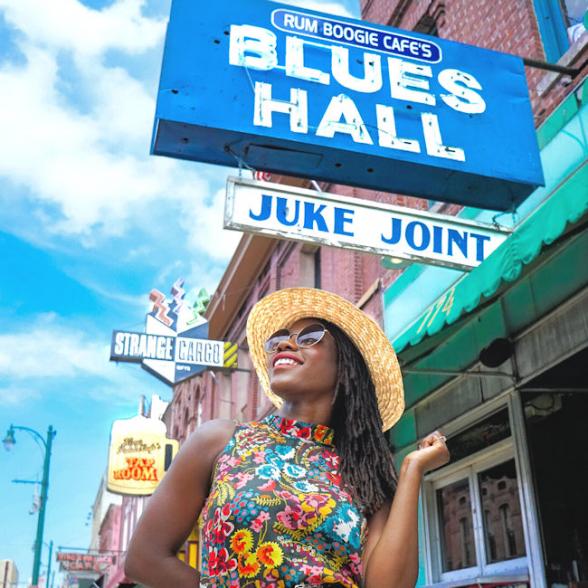
Beale Street is three blocks of music clubs including the most popular, B.B. King’s Blues Club. Make a stop here in the evening for some real live blues music. The Memphis Visitors Bureau also has a handy information booth on Beale Street. If you’d like to learn more about the origins of music in Memphis, visit:
-
The Memphis Rock and Soul Museum, an affiliate of the Smithsonian.
-
Sun Studio, where Elvis Presley, Johnny Cash, Jerry Lee Lewis, Carl Perkins and B. B. King recorded and is considered “The Birthplace of Rock and Roll.”
-
Memphis’ newest museum devoted to music, Soulsville:
-
Stax Museum of American Soul Music celebrates greats from the the 1960s and 1970s, like Otis Redding, Booker T. & the MGs, Issac Hayes, Aretha Franklin, Earth, Wind and Fire and more.
You can learn more about the heritage and culture of Memphis and the lower Delta and it’s relationship to the river at the Mississippi River Museum. Mud Island features River Walk, one of the most unique representations of the Mississippi River in the world. Near Beale Street, the Centre for Southern Folklore documents more about the southern lifestyle.

Accommodation:
River Inn Harbour Town
Day 7 Mississippi Blues Trail
Distance: 130 miles
Right outside of Memphis, you can begin following the Mississippi Blues Trail and have the added bonus of travelling the Mississippi Culinary Trail. In order to get the best of both and if you’re an Elvis fan, you’re going to have a bit of a zigzag today, but it will get you the whole picture. Tunica, just south on Highway 61 is considered the gateway to Blues Alley. Tunica River Park features an interpretive centre illustrating the life and legend of the river. Make sure you try some catfish cakes or catfish stuffed eggplant at Café Marie or the Blues and White Restaurant. Also try fried pickles, another local dish.
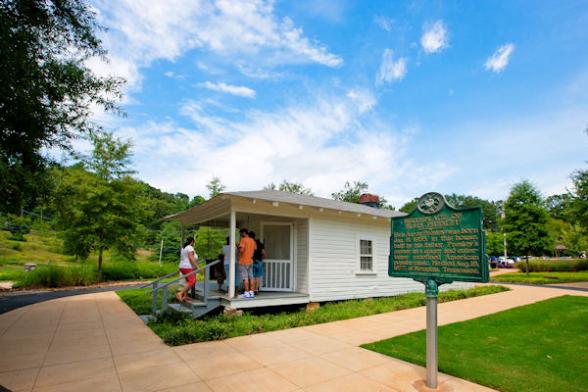
Next up, Tupelo, Mississippi, birthplace of Elvis Presley. After Graceland, the two room shotgun house will seem amazing. Also visit the Natchez Trace Visitor Center where early New Deal cottages from the depression have been rebuilt. Swinging over toward the river now, make sure to stop at the Delta Blues Museum in Clarksdale. The Rock n’Roll and Blues Heritage Museum is also there. From Clarksdale, you will drop south to Greenwood where you can visit the Greenwood Blues Heritage Museum and stay the night. Foodies may also like to take a class at the Viking Range Cooking School.
Accommodation: The Alluvian in Greenwood
Day 8 The Oldest Town in Mississippi
Distance: 213 miles
Natchez is the oldest town in Mississippi, founded in 1716. French fur traders established the city at the terminus of the Native American Natchez Trace, today a scenic byway. The region was the first to establish plantations using the rich loess soil for robust crops. Slaves were introduced by French colonists from the Caribbean. Natchez is also one of the most beautiful and best preserved towns in the South due to the fact that the town surrendered to Grant’s army without a fight. As a result it has over 500 antebellum homes, more than any other city in the United States. It’s worth spending some time just driving around the historic district filled with impeccably preserved structures with white columns and inside filled with Italian marble, imported crystal and sterling silver.
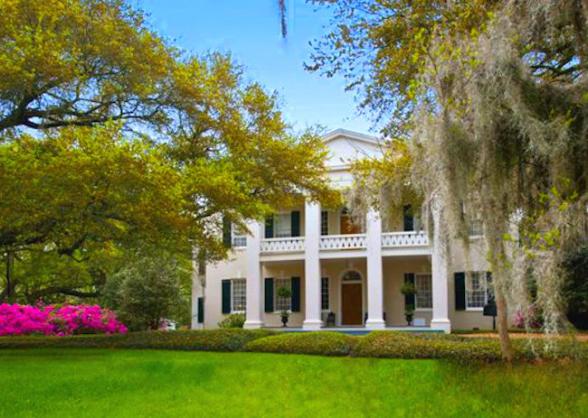
The best place to start your visit is at the Natchez National Historical Park. The Park itself includes two very different properties. Melrose, situated on 80 acres of lush oak covered land, was occupied by a prominent Southern family beginning in 1841. The William Johnson House on the other hand, was built and owned by a freed-slave who had slaves himself. The area’s Native American heritage is illustrated at Emerald Mound one of the largest mounds in the United States. Monmouth Plantation delivers outstanding accommodations in an authentic plantation home. Their restaurant also offers fine dining. Biscuits and Blues has been voted America’s #1 blues nightclub by the Memphis Blues Foundation, the W.C. Handy Organization and the San Francisco Blues Society.
Accommodation: Monmouth Plantation, Natchez
Day 9 On to Shreveport
Distance: 197 miles
It may be hard to believe, but it was in Shreveport, not Memphis, that Elvis got his start by borrowing money to eat and stay in motels to earn $200 a night performing at the Louisiana Hayride. Today, Shreveport is second only to New Orleans in Louisiana, in welcoming both US and international visitors. Get ready to party and be entertained. Riverboat casinos that have starred in many Hollywood productions line both sides of the Red River. Heaping plates of great food await.
On the softer side of Shreveport, at 42 acres, the American Rose Center is the nation’s largest rose garden. The R. W. Norton Art Gallery chronicles more than four centuries of American and European art, featuring the work of Frederic Remington and Charles M. Russell. In spring more than 10,000 azaleas bloom in the garden.
Louisiana State Exhibit Museum focused on the artifacts and art indigenous to northwest Louisiana. Like Mississippi and Alabama, portions of Louisiana were also originally occupied by Native Americans. This museum showcases the regions Indian lore. The J. Bennett Johnston Waterway Regional Visitors Center illustrates the history of the Red River in the region. The Boom and Bust Scenic Byway takes you through Oil City, Vivian, Plain Dealing, Sarepta, Homer and Lisbon, all small towns chock full of history and places to eat.
Accommodation: Eldorado Shreveport Resort
Day 10 The New Orleans Collection
Distance: 313 miles
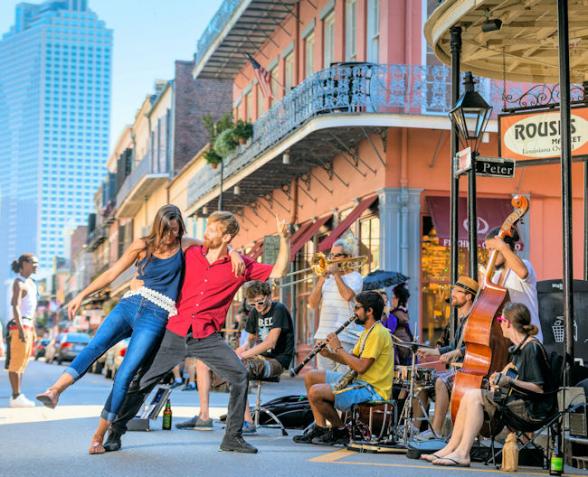
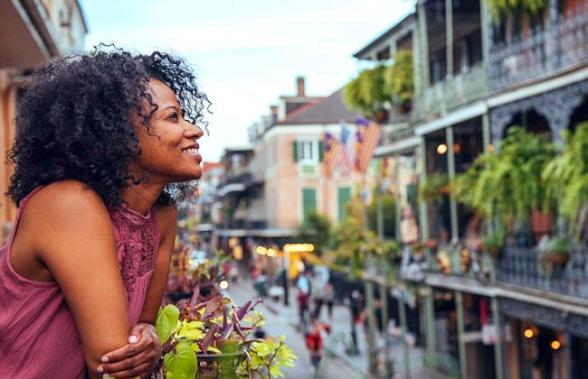
New Orleans is one of the coolest cities in America. The city has been jumpin’ ever since it became the commercial hub of the Louisiana Territory shortly after settlement in 1718. Napoleon sold the land to the United States in 1803. New Orleans dominated trade between the US and the Caribbean for decades which accounts for the many residents of New Orleans who are descendants of West Indies families. As a result, the city is a melting pot of French, Spanish and Caribbean influences.
We recommend that you set aside your first day in New Orleans to explore the French Quarter. Grab yourself a French Quarter map, take a seat at Café du Monde for beignets and chicory coffee and take the time to acquaint yourself with this wonderful city. Your first stop, of course, has to be at the French Quarter Visitors Center, one of the six sites of the Jean Lafitte National HistoricalPark, which introduces you to traditions and life in the area. Rangers lead daily walks through the French Quarter to tell the story of this district and its ties to the Mississippi River.
The New Orleans Collection is a museum, research center, and publisher dedicated to the study and preservation of the history and culture of New Orleans and the Gulf South region. Collections have been building over 40 years. The Ogden Museum of Southern Art adds to the story through fine art and artifacts focused on the South. Check with Preservation Hall to see if there are performances during your stay. If you want to learn Cajun cooking first hand, book a course at the New Orleans School of Cooking.
Accommodation: Monteleone Hotel for 2 nights
Day 11 The Garden District
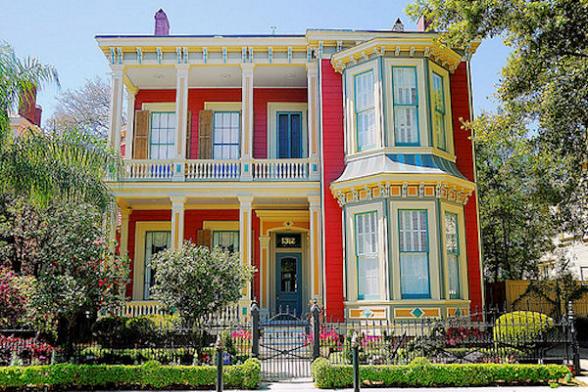
Spend some time in the Garden District, which gets its name from the huge homes and gardens that fill block after block. It is also the location of the famous Commander’s Palace Restaurant, considered by some to be one of the finest dining experiences in the world. After Katrina, it took until October of 2006 for the restaurant to get back into full swing. But indeed they did, leaving you the option to try this exceptional cuisine.
Just outside New Orleans, Laura Plantation, which has won several award for its impressive preservation, was owned by a Creole family. Laura was constructed in 1804 right on the banks of the Mississippi River. The original owner, Guilliaume Duparc petitioned Thomas Jefferson for land in America in return for his loyalty to the United States. The original plantation had a 3.5 mile long road road running perpendicular to the Mississippi that was lined with 69 slave cabins, communal kitchens, a slave infirmary.
You might consider a Steamboat Natchez Cruise at the end of the day to relax, have dinner and get a great view from the river.
Day 12 Down to the Coast
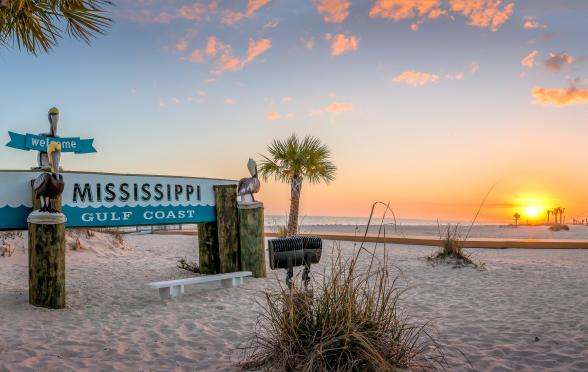
Prepare for magic! When you visit America’s southern sea coast, you’ll be mesmerized by the golden sun glistening on the sparkling water. Plan to dig your toes into the white sand or take shade under majestic oaks dripping with moss. You can stroll through lush flower gardens that complement timeless Old South architecture. Relax at a pace that is unrushed and unhurried. It’s sunny here more than 300 days a year. And when it does rain, it’s a refreshing burst of southern showers.
Ocean Springs, Mississippi earned the name “City of Discovery” for its commemoration of the French settlement of 1699, although Native Americans had been enjoying the sparkling blue waters and fertile coastal marshes long before that. More than 80% of the Gulf Islands National Seashore is submerged land, teeming with marine life. Conditions here are so tropical that the US Army established a training camp during World War II to simulate the South Seas. You can explore a Spanish Fort and a World War II Battery, or soak in more nature along the Live Oak Bicycle Trail and other trails throughout the Seashore.
Accommodation: Beau Rivage Resort & Casino
Day 13 The Civil Rights Movement
Montgomery, a city of lasting contrasts, was a hotbed of activity during the Civil Rights movement of the 1960s and also the capital of the Confederacy before the government moved to Richmond.
The Rosa Parks Library is the top attraction in Montgomery. The museum serves to honour Ms.Parks, the African American woman who refused to give up her bus seat to a white man, sparking the Civil Rights movement. You can place yourself in her shoes through video, artifacts and historical documents that tell the story.
Contrast that story with the Hank Williams story at the Hank Williams Museum. Born Hiram King Williams in rural Alabama, he is regarded among the greatest country music stars of all time. He charted eleven number one songs between 1948 and 1953, though unable to read or write music to any significant degree. His hits included Your Cheatin Heart, Hey Good Lookin’ and I’m So Lonesome I Could Cry. It amazing how many hits he had before he died at age 29 from a mixture of drugs and alcohol.
To learn the story of Montgomery itself, visit Old Alabama Town, one of the South’s premier history villages. The collection of authentically restored 19th and 20 century buildings stretches six blocks in the heart of historic Montgomery.
Accommodation: Embassy Suites, Montgomery
Day 14 Birmingham, Alabama
Turning back north, now, you will be headed for Birmingham, Alabama’s largest city. The awesome Birmingham Civil Rights Institute is a must see for every visitor to Alabama. Incredibly moving exhibits tell the story of the struggle for freedom during the civil rights movement and take the story right up to today. Be sure to also take the walking audio tour of Kelly Ingram Park. The 16th Street Baptist Church is across the street. Then you can absolutely fall in love with the Alabama Jazz Hall of Fame, like everyone else who visits. It’s a wonderful tribute to Jazz greats and has a resident expert who played with the Tommy Dorsey band. He’s over 80 and certainly is the genuine article!
For a look at the origins of Birmingham in 1871, learn the story of steel making at the Sloss Furnace National Historic Landmark where you can tour an actual steel mill. The industry was critical to making Birmingham the city it is today.
Accommodation: Tutwiler Hotel