Cape Cod Holidays
Martha's Vineyard and Nantucket
Nantucket
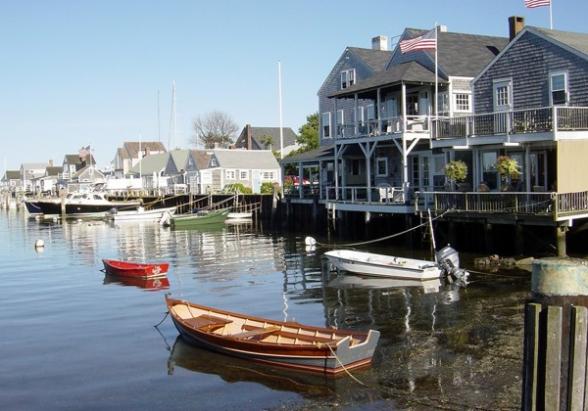
Thirty miles off the Massachusetts coast, this crescent-shaped island is a world by itself. The slower pace of life on the island offers guests ample time to bike or walk to explore the island's lighthouses, conservation land, and unspoiled beaches. In April, the Daffodil Festival features three million bright yellow blooms planted by islanders to welcome the arrival of spring. Winter is also a great time to visit the island, with Nantucket Noel and the Christmas Stroll.
Nantucket is a 50-square mile island of incredible natural beauty and unspoiled historic charm, situated 30 miles out to sea south of Cape Cod. The charm of Nantucket is embodied in its well-preserved architecture and its protected moors, plains and beaches. For more than 150 years Nantucket served as the center of the world's whaling industry.
Martha's Vineyard -
The hundred square-mile Island of Martha's Vineyard lays seven miles off Cape Cod, accessible by ferry or airplane. Whether one visits urbane 'down island' (Tisbury, Oak Bluffs and Edgartown) or pastoral 'upisland' (Chilmark, Aquinnah and West Tisbury), Martha's Vineyard-New England's largest island-there's ample enchantment for all. Multiple personalities-summer and 'other' seasons-captivate visitors year-round.
People know summer best, but autumn's 'festival season'(food & wine, film, fishing, more) is also popular for weddings. Winter'sserenity and spring's renewal are palpable. Beaches are broad; hills are low;rolling meadows are edged by stone walls and woods thick with black tupelo andred cedar; healthy hinterlands are pond-speckled. No fast food chains here. New traditions of slow food incorporate farm- and ocean-to-table culinary arts at restaurants island-wide.
The towns of Martha's Vineyard...
Edgartown-
Edgartown was practically built at the foot of the sea,and has been one of the world's yachting capitals for more than a century. It has all the characteristics of a New England coastal town, having once been a whaling port. Main Street in Edgartown is a picture book setting with its harbor and waterfront. The tall square-rigged ships that sailed all the world's oceans have passed from the Edgartown scene, but the heritage of those vessels and their captains has continued. The architecture, charming alley ways, subdued colour (houses and buildings can only be painted white, per town ordinance),flowering rose bushes, and tiny, one-of-a-kind specialty shops and boutiques, make Edgartown a sophisticated village.
Vineyard Haven
Excellent shops, fine restaurants, and a beautiful harbor are only a few of the attractions that make Vineyard Haven so special to tourists and residents alike. The Tuck & Holand Copper Studio got its start back in 1974, when Travis Tuck created his first weathervane as a prop for themovie Jaws, which was filming near his home on the Vineyard. Since that time,hundreds of evocative figures - some drawn from nature, some from contemporary life - have been commissioned by private owners and businesses who appreciate this unique artistry. Galleries and artists'studios, including the Shaw, Taylor and Simon shops dot Main Street, and complement the creative feel of this village.
Oak Bluffs
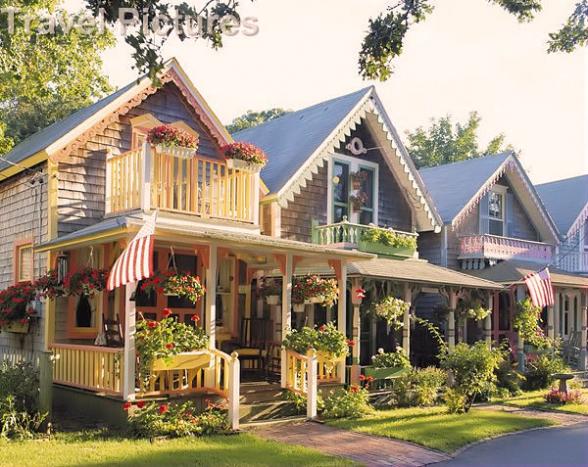
The Town of Oak Bluffs, located on the northeast shore ofthe Vineyard, facing Cape Cod. Originally incorporated in 1880 as Cottage City, in 1907 the town's name was changed because of the growth in the year round population and the changing face of the town. Home to the idyllic "gingerbread"cottages, beautiful harbor, a diverse arts district and vibrant main street called Circuit Avenue.
There-christening marked the coalescence of all the elements that make Oak Bluffs unique, and distinguish its character in relation to the other Island towns. With its diversity and density of population and the tradition of being welcoming to all people and especially family-friendly, Oak Bluffs has proven itself to be the innovator and resilient flak-catcher in response to changing trends and conditions in the society at large.

Aquinnah Cliffs and Gay Head lighthouse
Thebrilliant colors of the mile-long expanse of the Aquinnah Cliffs astonishedearly explorers and have continued to be a source of intense interest toscientists and visitors alike. Here, layers of sands, gravel, and clay ofvarious hues tell a hundred-million-year-old story of a land first covered withforests, then flooded and laid bare, then covered with new growth, time andagain. The seas, glaciers, and land itself have contorted these once-levellayers into waving bands of color that stream above the sea.
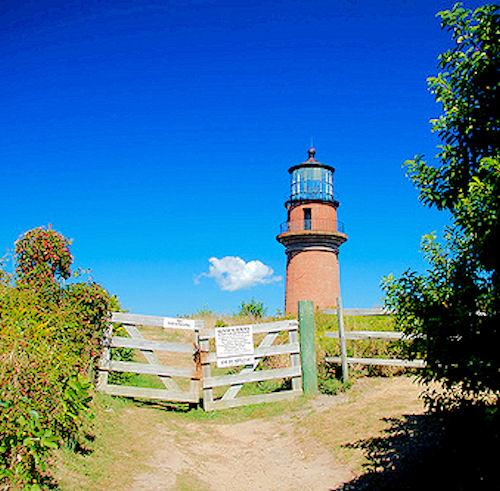
Erosion continues as it has for centuries, turning these as red and revealing fossil secrets. From the fossils revealed by erosion, we know of the great sharks that swam over what is now Chilmark, of the clams andcrabs-so like those of today-that inhabited ancient seas. Pieces of lignite from the Cretaceous period are found on the beach, looking like nothing so much as the remnants of recent campfires. Fossil bones of camels and wild horses, as well as those of ancient whales, have been found in the Cliffs. The Aquinnah Cliffs are a national landmark; yet they are seriously threatened by carelessness. To protect the Cliffs, climbing and the removal of clay are both prohibited by law. The Gay Head Lighthouse has always been perilously close tothe ever-eroding cliffs. The red brick light was built in 1844 to replace awooden tower authorized by President John Quincy Adams. Originally inhabited by Wampanoag, it was Noepe, "land amid the streams." Today's Aquinnah is home to descendants of Wampanoag who helped settlers and their native history is pervasive.
Chilmark
Chilmark is a town of rolling hills and unmatched coastline. Not so long ago uninhabited except for an occasional farm or fishing village, it now provides the setting for many a summer home. The stone fencesof the sheep farms still ribbon the hills, while the old stone animal pound stands on the South Road, a reminder of the days when a gate left open resultedin a roaming flock and a fine for its owner. All roads from the center atBeetlebung Corner lead to points of beauty. Middle Road, perhaps the leastimproved of Island main roads, provides a lovely view of a placid farm with the Atlantic Ocean as a backdrop.
From North Road, the quaint fishing village of Menemsha is home to the Vineyard's small commercial fishing community, and boasts such rustic culinary delights as chowder and lobster rolls at Larson's Fish Marketand fried clams at The Bite. Locals knowthere's no greater treat than a picnic on the Menemsha beach at the end of the day for a view of a spectacular sunset.
West Tisbury
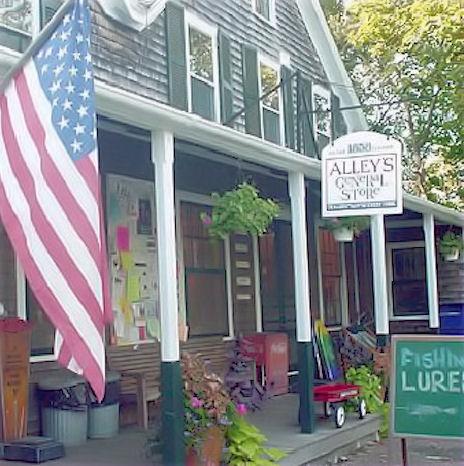
Iconic West Tisbury captures every beauty of a New England village, from the view of the white spiral of the church in the town center to the historic landmark of Alley's General Store. Still a pastoral landscape, West Tisbury is also home to the magnificent Polly Hill Arboretum, daily open studio at the Martha's Vineyard Glassworks, and the Field Gallery outdoor sculpture gallery.